Information without overstating the evidence
Regulatory permission is not a guarantee of zero risk. However, a laboratory finding or an association in a study does not automatically establish that ordinary product use causes disease.
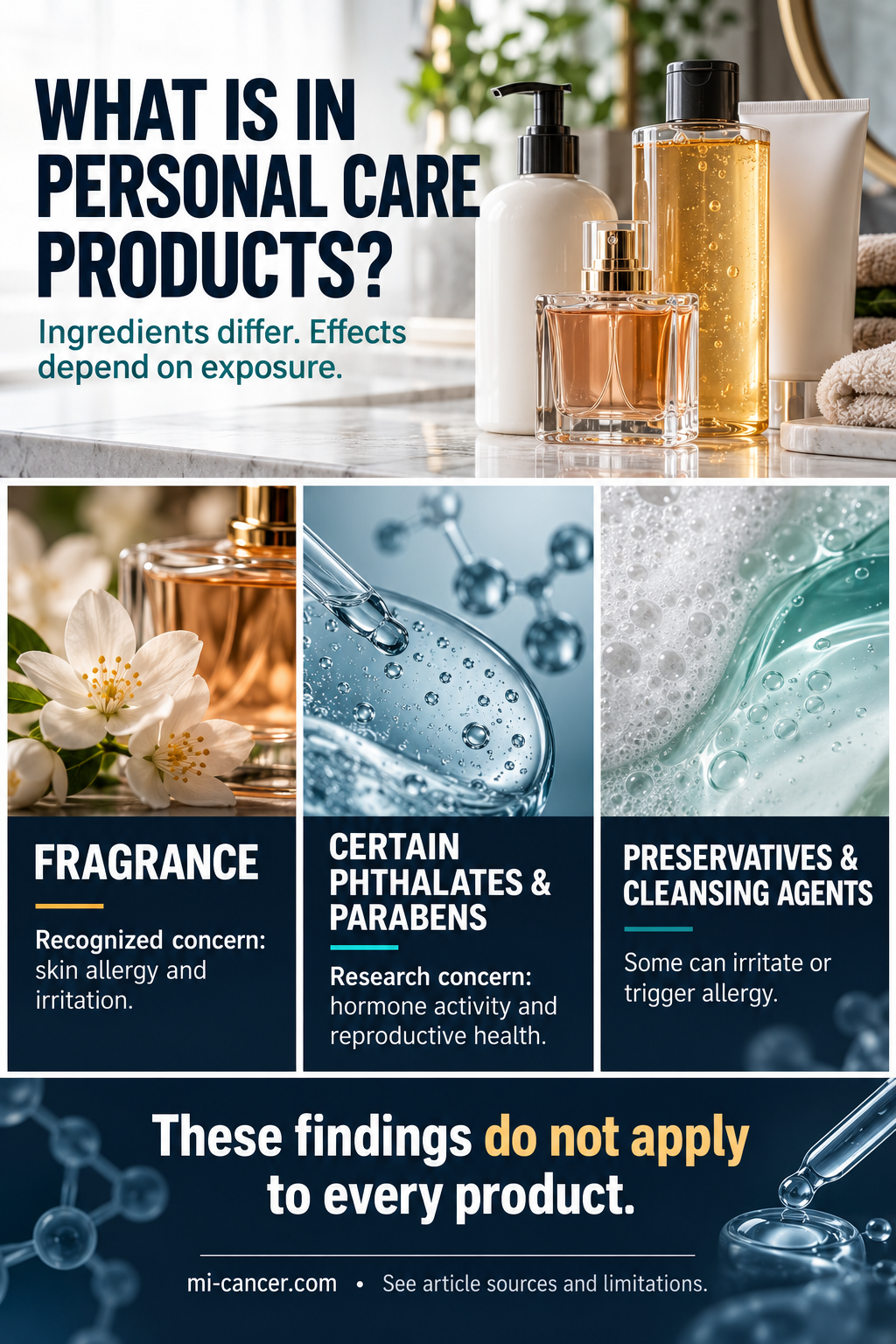
Shampoo, soap, dishwashing detergent, laundry products, fabric softeners, lotions, perfumes, hair treatments, nail products, and air fresheners can expose people to different chemical mixtures.
Some ingredients can cause irritation or allergies. Certain exposures are associated with respiratory disease. Some substances can interfere with hormone activity, and particular chemicals are recognized cancer hazards. Other concerns remain under investigation.
A skin allergen is not automatically a carcinogen. Products within the same category can have different formulations and exposure patterns.
How exposure and evidence differ
Exposure can occur through skin contact, breathing vapors or airborne droplets, and accidental ingestion. Concentration, frequency, ventilation, application method, and contact time matter.
A hairdresser, nail technician, or professional cleaner may experience a different exposure pattern from someone who occasionally uses a similar product.
| Evidence | What it can tell us |
|---|---|
| Human carcinogenic hazard | A substance can cause cancer under relevant exposure conditions; this does not calculate the risk from every product use. |
| Human observational study | An exposure and outcome are associated; other explanations and limitations must be considered. |
| Animal study | Effects occurred in animals under the tested conditions; translation to human exposure requires evaluation. |
| Cell or organoid study | A biological mechanism is possible under laboratory conditions; clinical disease has not necessarily been demonstrated. |
Endocrine disruptors and hormones
Hormones help regulate development, reproduction, metabolism, and other functions. Some chemicals can interfere with these signaling systems.
Research on personal care products includes concerns about certain phthalates, parabens, and other ingredients with potential endocrine activity. These substances do not all have identical effects.
An ingredient’s potential to affect a hormone pathway does not establish that every product containing it causes illness. The particular substance, absorbed amount, and timing of exposure matter.
Personal care research has examined relationships with puberty, reproductive outcomes, and other health effects. Findings should be interpreted by chemical and study, rather than applied to every shampoo, lotion, or perfume.
Shampoo, soap, body wash, lotions, and hair gel
These products may contain cleansing agents, fragrances, preservatives, and other ingredients. A concern about one ingredient should not be generalized to the entire category.
For many users, immediate concerns include irritation and allergic contact dermatitis. Fragrances can be allergy triggers in shampoos, skin care products, and other personal care items.
If a product repeatedly causes itching, redness, burning, or swelling, continued use can prolong contact with the trigger. Persistent reactions deserve clinical evaluation.
A familiar brand, pleasant scent, or “natural” presentation does not establish how an individual will tolerate the formulation.
Source: American Academy of Dermatology: Contact Dermatitis Causes
Perfumes and air fresheners
Perfume adds fragrance to the body, while air fresheners add fragrance to indoor air. These create different exposure patterns.
Fragrance allergy is a recognized concern. An allergy does not establish that a fragrance causes cancer or hormone disruption. Conversely, the absence of a rash does not resolve every question about a formulation.
If symptoms repeatedly occur around a particular scented product, consider removing that source and discussing recurring symptoms with a healthcare professional.
Source: American Academy of Dermatology: Contact Dermatitis Symptoms
Laundry detergents and fabric softeners
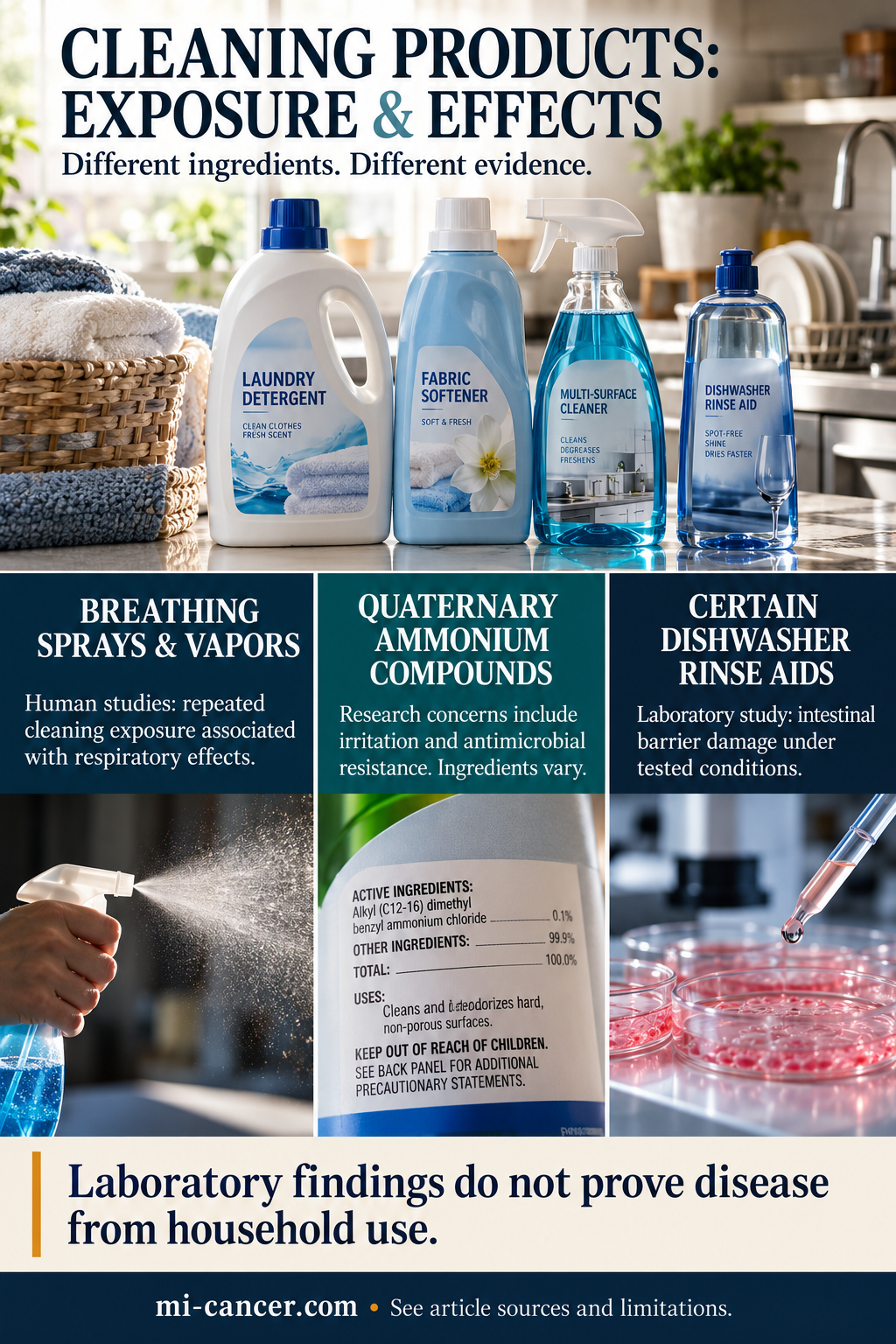
Laundry products differ in their cleansing agents, fragrances, preservatives, and conditioning ingredients. Some quaternary ammonium compounds are used as antistatic agents. Other members of this broad chemical family serve different functions.
A scientific review identifies concerns and significant gaps in environmental and human health evidence for quaternary ammonium compounds. It does not establish that every fabric softener causes reproductive harm or cancer during ordinary use.
Identify the actual formulation and distinguish disinfectants from detergents and softeners. Products sharing a marketing category do not necessarily share the same toxicological profile.
Source: Review: Quaternary Ammonium Compounds—A Chemical Class of Emerging Concern
Cleaning products and respiratory health
Cleaning exposures deserve attention beyond cancer.
A longitudinal study found accelerated lung-function decline among women who cleaned at home or worked as cleaners. This was an observational association. It did not identify a single ingredient as the cause or demonstrate an identical effect for every product.
Another study associated frequent bleach use with non-allergic adult-onset asthma and respiratory symptoms in women.
These findings support taking repeated cleaning exposures seriously, particularly in occupational settings. They do not justify stating that all cleaning products cause cancer.
Original studies: Cleaning and Lung Function Decline · Bleach Use and Asthma
Dishwashing products and the intestinal barrier
A study investigated dishwasher detergents and rinse aids using intestinal cell and organoid models. Researchers identified alcohol ethoxylates in certain rinse aids as contributors to epithelial inflammation and barrier damage under the tested conditions.
The research included concerns about residues associated with professional dishwashing systems. It was not a clinical trial showing that routine household dishwashing causes intestinal disease or cancer.
This evidence warrants investigation without overstating what has been demonstrated in people.
Original study: Gut Epithelial Barrier Damage Caused by Dishwasher Detergents and Rinse Aids
Antimicrobial products and the body’s microbiome
The microbiome includes communities of microorganisms on the skin and in other parts of the body. “Good flora” is an everyday expression for a much more complex biological system.
Antimicrobial chemicals are designed to act against microorganisms. This does not establish that every external use destroys beneficial intestinal bacteria.
Questions that require separate evidence
- Does the ingredient affect microorganisms in laboratory conditions?
- Does actual use change a person’s skin or intestinal microbiome?
- Is the change persistent?
- Does it cause a measurable health problem?
- Is there evidence connecting that change to cancer?
These steps cannot be assumed. Research on quaternary ammonium compounds includes antimicrobial resistance and other biological concerns, alongside substantial evidence gaps.
The evidence does not support a blanket statement that household products “kill good bacteria and lead to cancer.”
Hair dyes, bleaches, relaxers, and straighteners
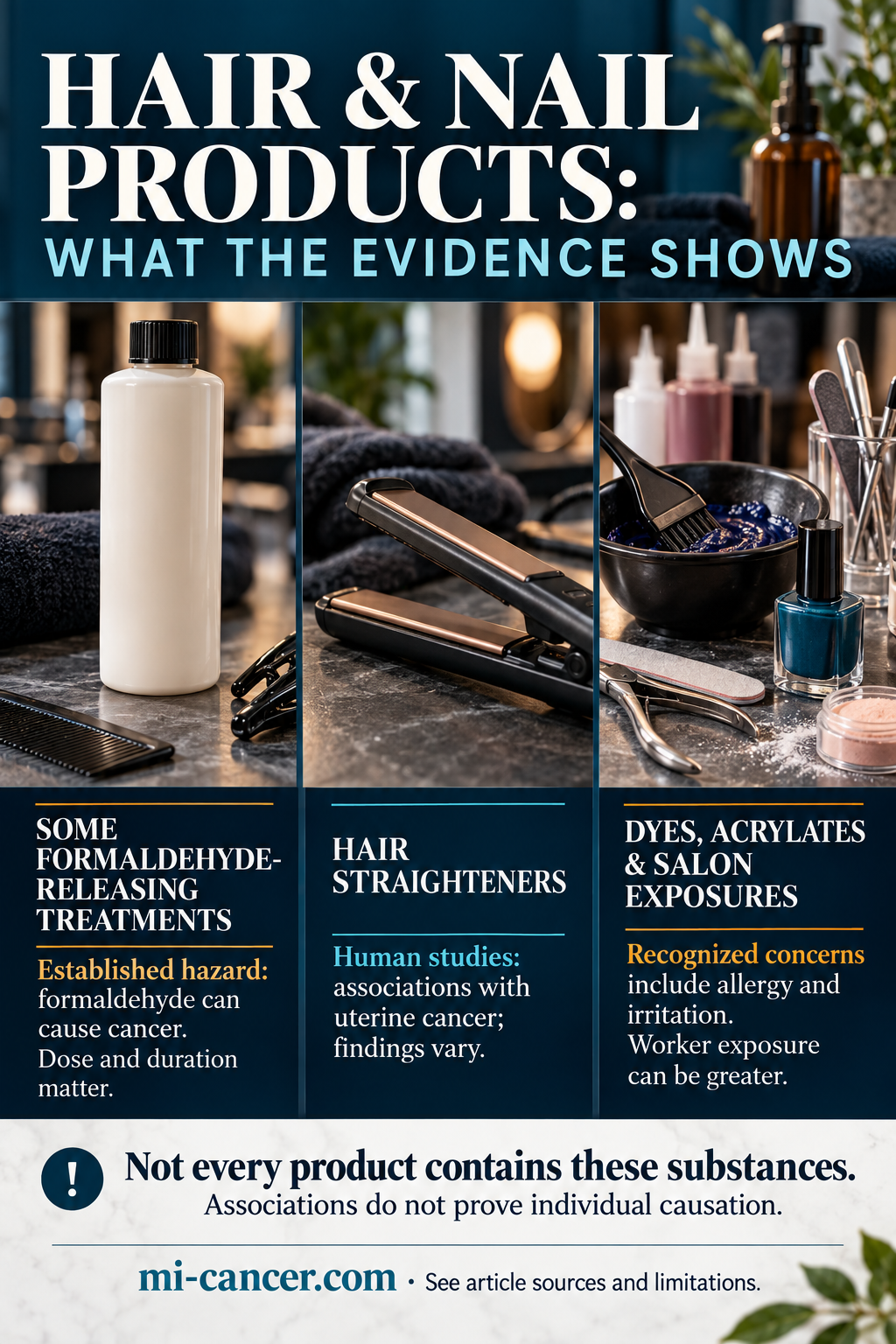
Hair coloring and straightening are different processes and should be evaluated separately. Hair dyes can cause allergic reactions, and occupational exposure differs from occasional personal use.
A 2022 prospective study reported an association between hair-straightening product use and uterine cancer. It did not establish that a particular brand or ingredient caused the cancers.
Results across studies are not uniform. A separate Black Women’s Health Study analysis reported an overall heavy-use estimate with a confidence interval that included no association. Presenting both studies avoids suggesting that every investigation reached the same conclusion.
These findings justify attention and further research. They do not establish the cause of an individual’s cancer.
Sources: Hair Coloring Precautions · Original Sister Study Research · Original Black Women’s Health Study Research
Formaldehyde: a recognized cancer hazard
Formaldehyde is classified by IARC as carcinogenic to humans. It is among the chemicals investigated in certain hair and nail workplace exposures.
This is stronger hazard evidence than a preliminary laboratory signal. However, it does not calculate the cancer risk from a particular treatment. Formulation, airborne concentration, and exposure duration matter.
Do not assume every hair treatment contains or releases formaldehyde.
Sources: IARC Assessment Summary (PDF) · NIOSH: Hair and Nail Workplace Exposures
Nail polish, gel nails, acrylics, and adhesives
Nail services may involve solvents, acrylates, methacrylates, adhesives, and dust. Products and procedures vary.
NIOSH identifies concerns including skin and respiratory effects and describes research into reproductive outcomes among nail technicians. It also provides workplace exposure-control information.
Occupational reproductive findings should not be translated into a claim that an occasional manicure causes birth defects. They should also not be dismissed when workers experience repeated exposure.
Source: NIOSH: Nail Technicians
Making more informed choices
- Identify the exact product and its ingredients.
- Notice whether it is sprayed, heated, left on the skin, or rinsed away.
- Follow instructions for concentration, application, and ventilation.
- Discuss recurring skin or breathing symptoms with a healthcare professional.
- For salon and cleaning work, consult exposure-control guidance relevant to the job.
- Ask manufacturers specific questions instead of relying only on marketing language.
- Keep a record of products involved when symptoms recur.
For nail professionals, local exhaust ventilation and other workplace controls are particularly relevant.
Reducing a particular exposure does not guarantee prevention of cancer, correction of hormone function, or restoration of the microbiome.
Source: NIOSH: Nail Salon Exposure Controls
How this guide uses evidence
This guide includes original human and laboratory research, scientific reviews, and occupational health information. It does not rely exclusively on FDA or EPA assessments.
Regulatory permission is not treated as proof of zero risk. Disagreement with a regulatory assessment is not treated as proof of misconduct. Sources are linked so readers can examine methods and limitations.
Educational & editorial notice
This page provides general educational information using original summaries of publicly available sources. It is not medical advice, diagnosis, treatment, occupational certification, or legal advice.
It does not determine the safety of a particular formulation or establish the cause of an individual’s illness. Ingredient concerns should not be attributed to every product in a category.
References describe study findings and limitations. An association does not establish causation, and laboratory or animal results do not automatically establish disease risk from ordinary human use.
This page does not allege fraud, concealment, unlawful conduct, or professional misconduct by any company, institution, or practitioner.
Do not stop prescribed treatment or avoid medically necessary procedures because of this information. Discuss personal medical concerns with a qualified professional.
Scientific knowledge and formulations change. Readers may submit possible corrections through the website’s contact channel, identifying the statement and providing a verifiable source.