October 2026 – A New Recurrence
On September 25, 2026, my latest MRI revealed two new abdominal lesions, concerning for recurrent metastatic kidney cancer. Because I have already undergone multiple major abdominal surgeries, choosing the next treatment requires careful consideration
I have been referred to Interventional Radiology to evaluate ehether image-guided ablation is an appropriate treatment option. I am also seeking a surgical evaluation to determine whether complete resection is feasible although prior abdominal surgeries may increase the complexity and risks of another operation
My journey continues, and I remain focused on finding the best treatment option for this recurrence.
The Diagnosis
In 2012, I was diagnosed with clear cell renal cell carcinoma — kidney cancer. At the time, I was practicing as a family medicine physician in the United States. That same year, my partner was also facing her own cancer. We got through it together.
New Recurrences
Two areas of oligometastatic disease — in my abdomen and in my shoulder blade — were first identified in 2022, initially managed by my oncologist and surgical specialists at Loma Linda University Medical Center.
A Dangerous Complication
I spent almost a week hospitalized for severe liver toxicity caused by a cancer medication, to the point of being placed on a liver transplant waiting list. I was treated with steroids and anti-organ-rejection medication, and in the weeks that followed, the cancer grew rapidly again. My liver ended up recovering on its own, and I never needed the transplant. Given the complexity of my case, my oncologist at Loma Linda, Dr. James Tsai, referred me to Dr. Sumanta Kumar Pal, a kidney cancer specialist at City of Hope, who has managed my ongoing care ever since. I stayed on Keytruda under his care until it was eventually discontinued due to lack of response.
Saving My Arm
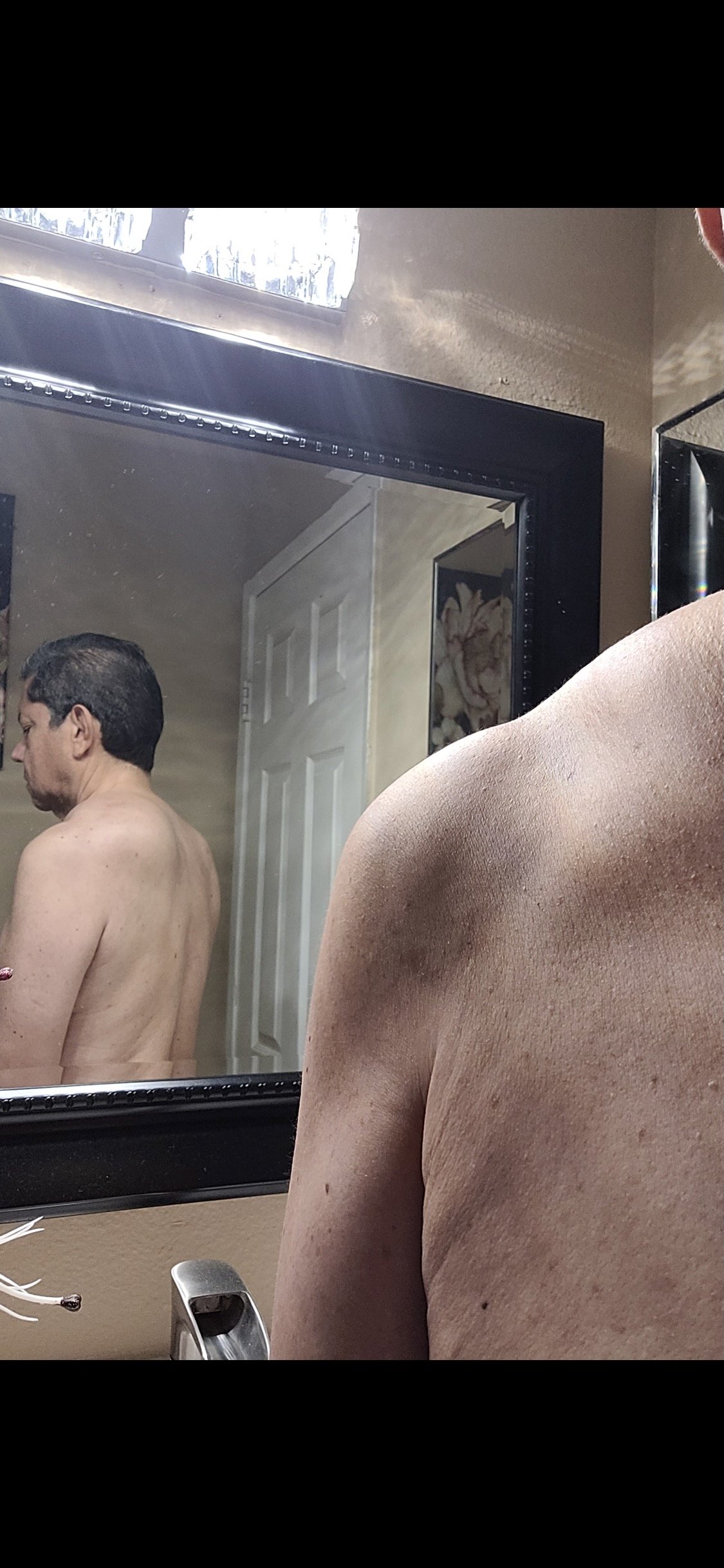
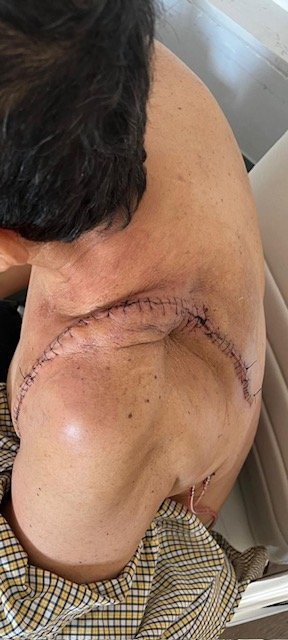
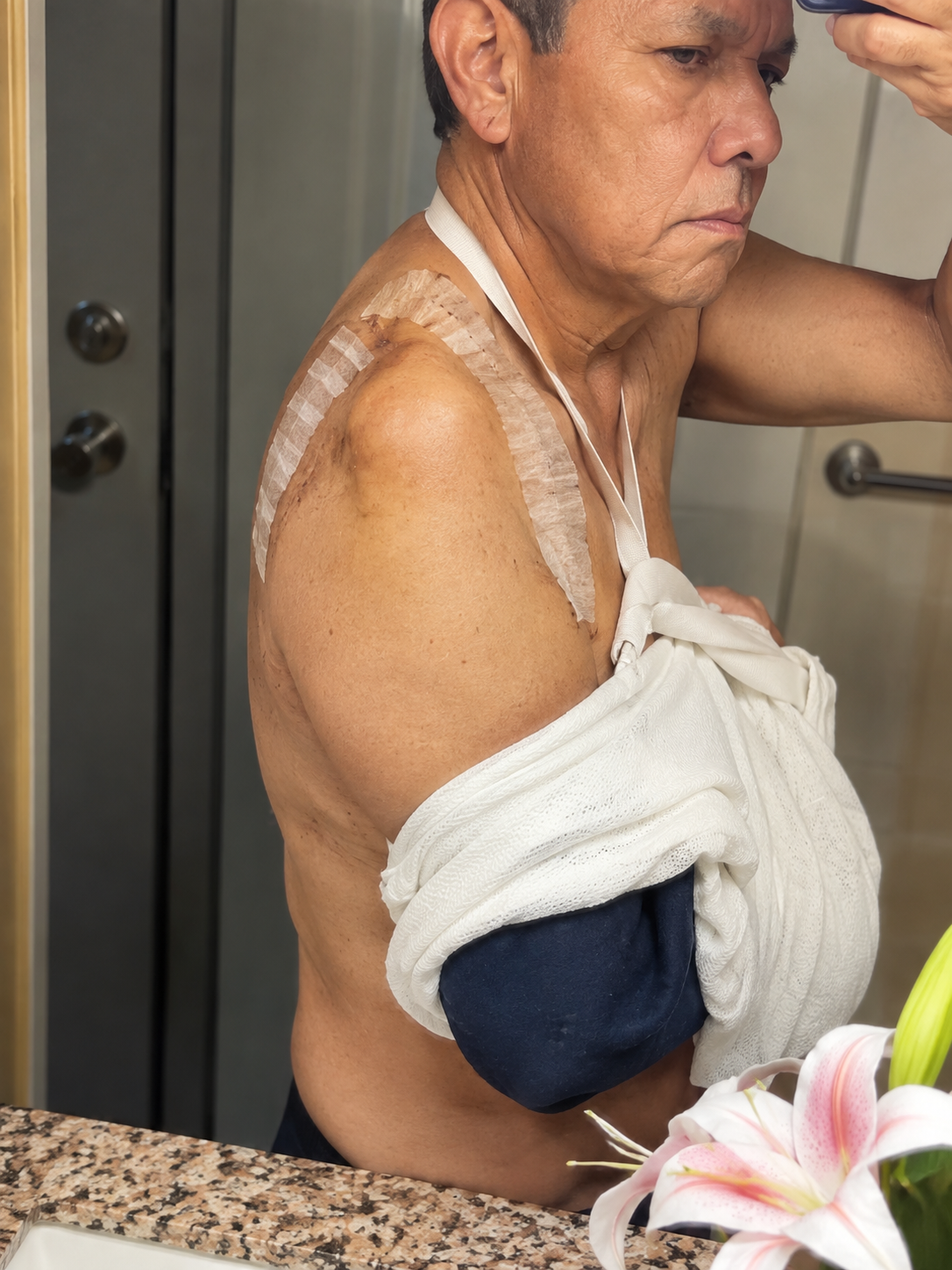
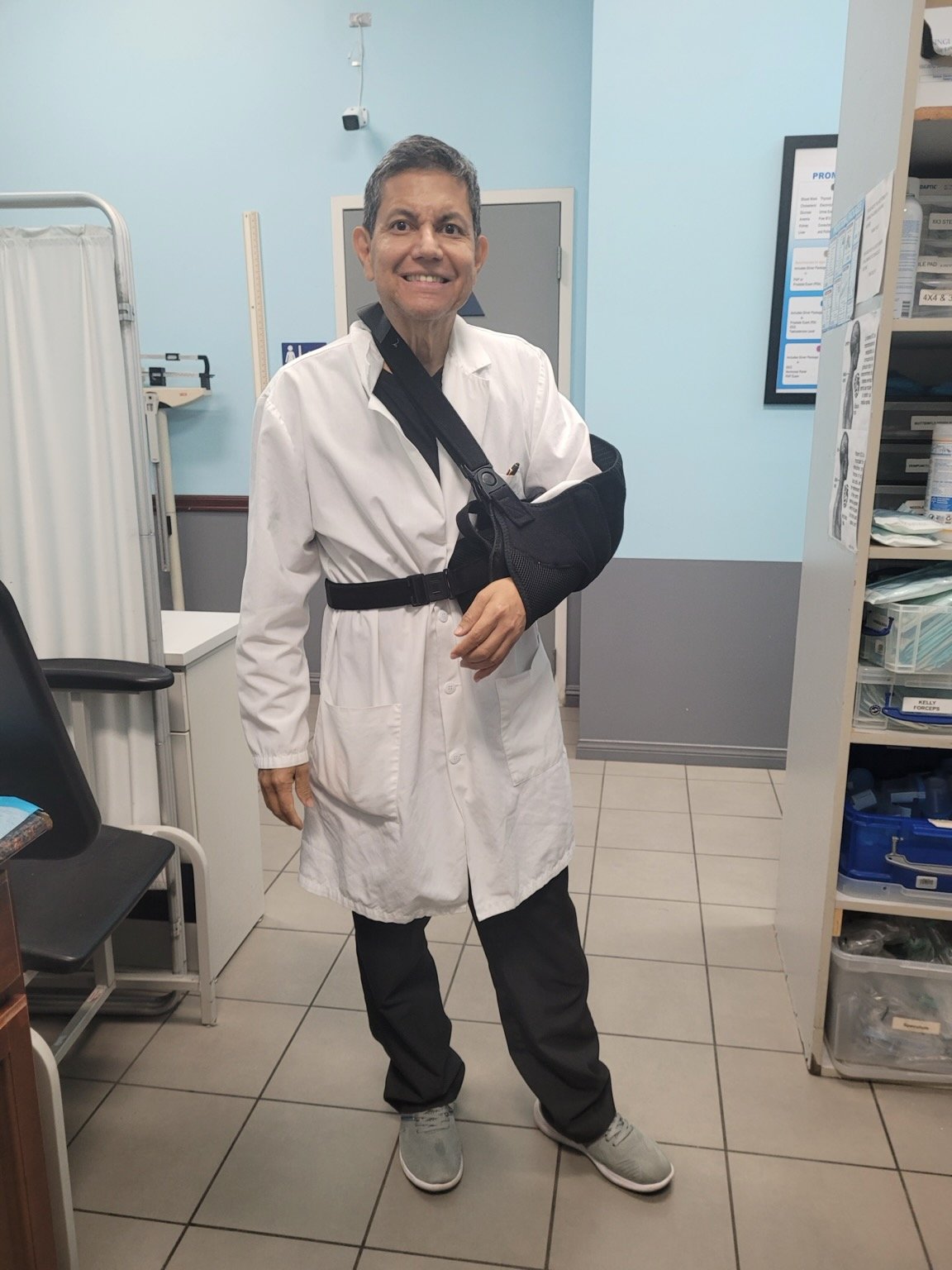
The tumor had been growing for several months while I kept working, day after day without missing a shift, at an urgent care clinic serving low-income patients in California. By the time it was finally operated on, it had extensively compromised my left shoulder blade, and there was a real possibility I could lose the arm entirely. An oncologic surgeon in Loma Linda raised amputation as a possible option, but referred me to Dr. Joseph Femino, a musculoskeletal oncology orthopedic surgeon at City of Hope, whose radical surgery managed to remove the cancer and still preserve my arm.
Preserving What Could Be Preserved
After that surgery, the cancer in my lower abdomen — also large — was addressed back at Loma Linda University Medical Center, with urologist Dr. Brian Hu and colorectal cancer surgeon Dr. Aka Allison working alongside him. I went into the operating room with a permanent colostomy and urostomy already planned and marked on my body, given what the team expected to find. But during surgery, a frozen biopsy showed no cancer present in the bladder or rectum, and a full robotic review of the abdomen found no further lesions. I came out of that surgery with both organs preserved — though a separate, unrelated cancer was found within the prostate.
Another Recurrence
I spent two years on immunotherapy hoping to prevent a relapse. It didn't work: during one of my routine imaging checkups, a new metastasis was found in the pelvic area, which grew over time. Immunotherapy was stopped, and the same team at Loma Linda — Dr. Brian Hu and Dr. Aka Allison — operated to remove it, the second time they'd removed a pelvic recurrence for me. Since then, I've been off active cancer medication. The remaining treatment options come with side effects that concerned both me and my care team, so for now we're prioritizing close surveillance instead.
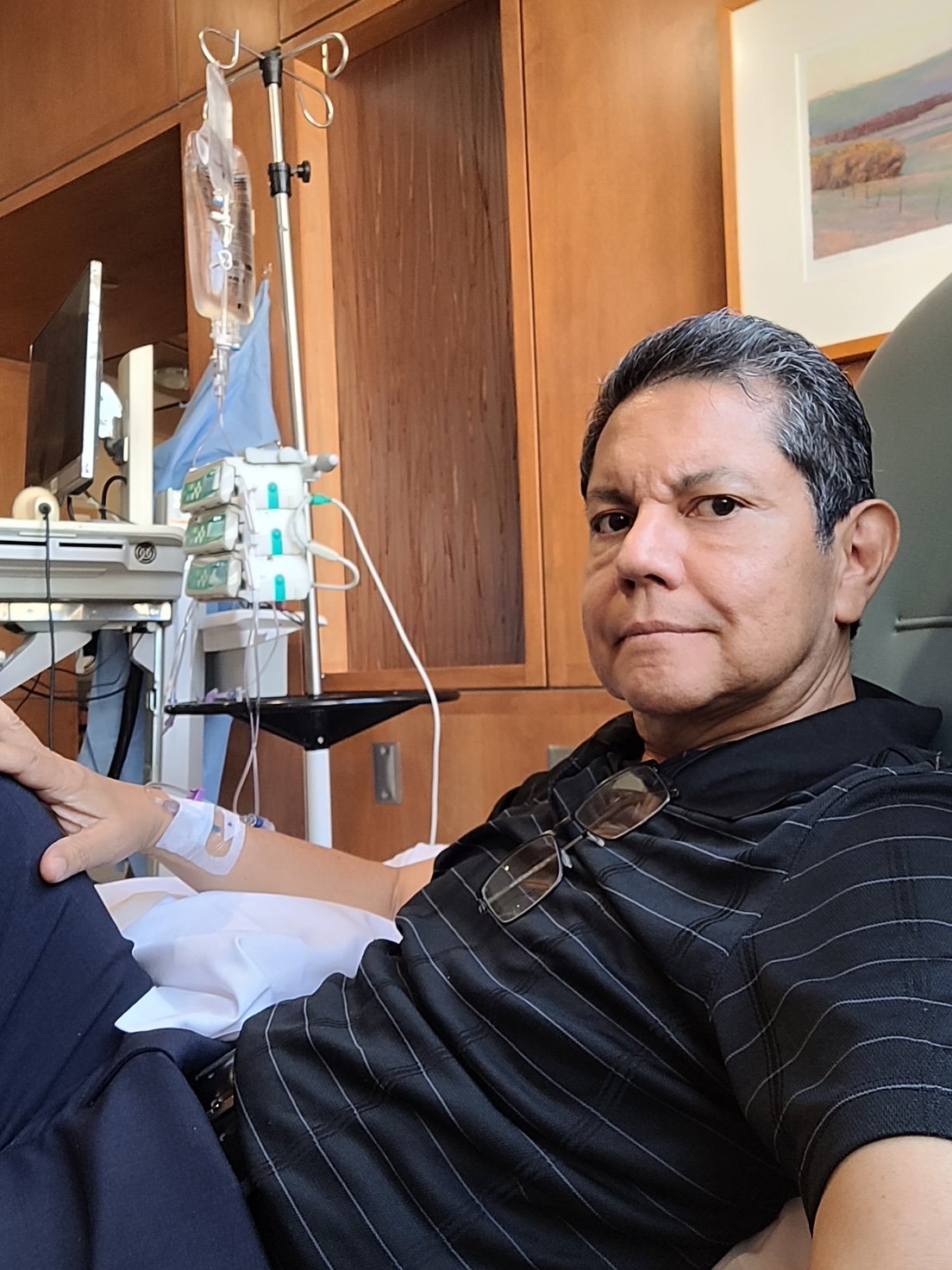
Before this latest recurrence, my care consisted of close surveillance with CT scans of my chest and MRIs of my abdomen and pelvis every few months. Small nodules at the base of both lungs have remained stable on previous imaging. My September 25, 2026 chest CT result is still pending . I am now awaiting evaluation and treatment of the two new identified abdominal lesions, concerning for recurrent metastatic kidney cancer.
Day to day
On top of this, a spinal injury from years ago left me with chronic nerve pain, managed with periodic nerve blocks and ablations. I stopped practicing medicine in 2025 for health reasons, and I now receive Social Security Disability. Ongoing follow-up care carries a significant cost, even with insurance.
During this time of surveillance, I've focused on what I can control: nutrition, stress management, and sleep — while my medical team continues to monitor things closely.
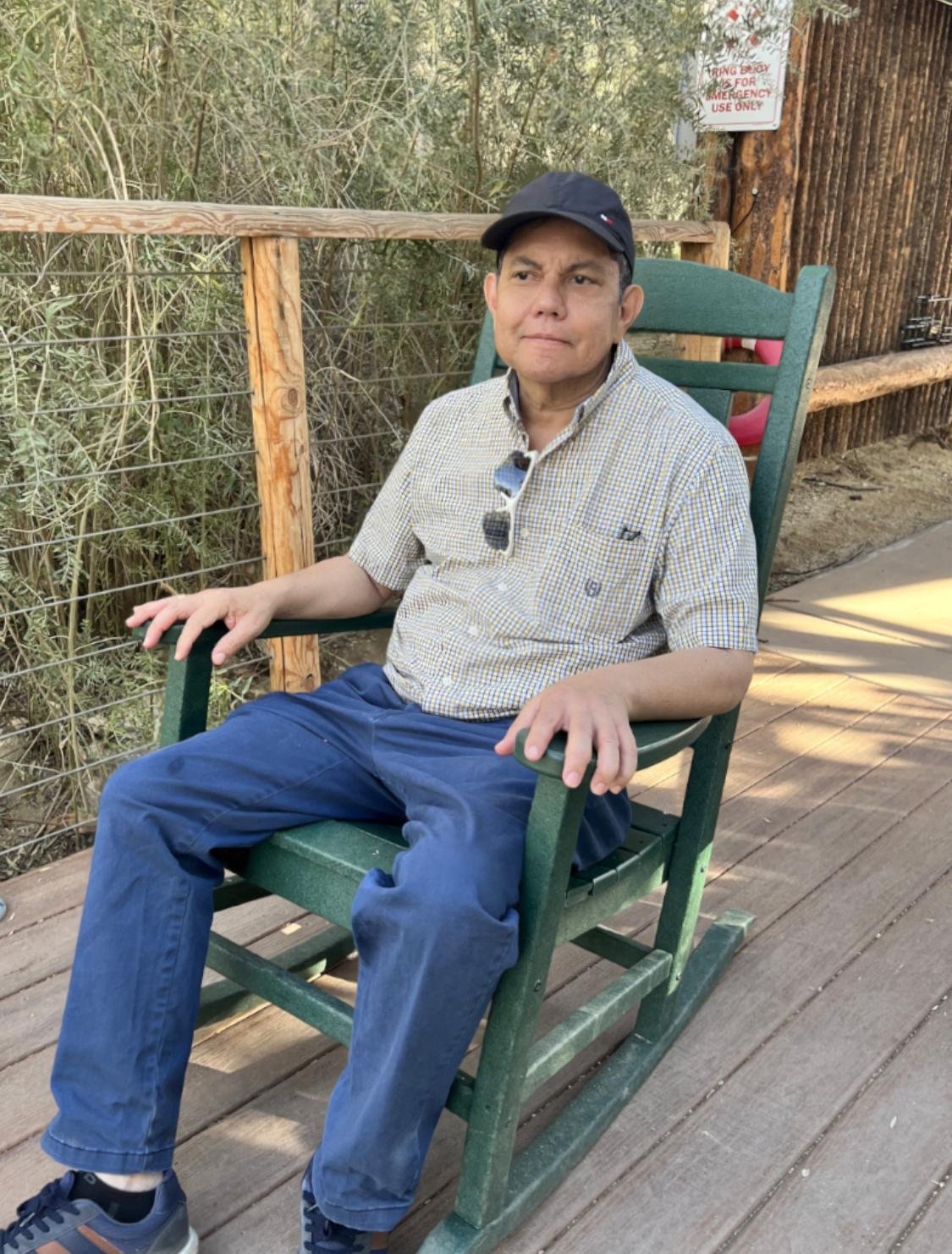
Thank you for reading
Making it this far already means something. If you'd like to know how your support helps, or want to give directly, here's where that goes.
See How You Can HelpYou can also support directly any time via my GoFundMe.